Your back vs. your desk: a truce
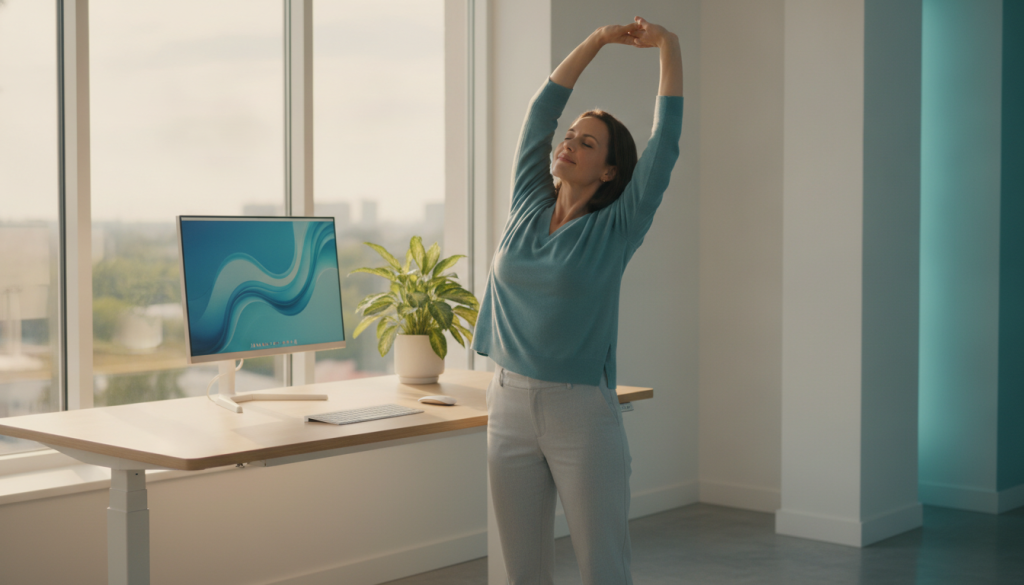
Desks do not damage spines. Stillness does. The human back is built for variety — it feeds its discs by changing pressure, which means the best sitting posture is simply your next one.
The truce terms
1. Move the clock, not just the chair. Every 30–45 minutes, stand for a minute. Refill water. Take calls upright. The interruption is the treatment; no equipment required.
2. Bring the screen to your eyes, not your neck to the screen. The top of the display around eyebrow height; laptop users, a stand plus external keyboard is the single best purchase in ergonomics.
3. Let the chair carry you. Sit back into the backrest, feet flat, forearms level. ‘Sitting up straight’ by muscle power alone is a workout, not a posture — it fails by 11 a.m.
4. Strengthen what sitting weakens. Two short sessions a week for hips, glutes and trunk cover most desk-related backs. Walking counts. Stairs count double.
What pain is saying — and not saying
Most desk-related back pain is muscular, cranky rather than damaged, and eases within days to weeks with movement. Pain is a smoke alarm — sensitive by design — not an X-ray report.
Come and see us promptly if pain runs below the knee, if a foot feels weak or numb, if pain wakes you at night consistently, or if it follows a fall. Those patterns deserve a proper look. Everything else mostly deserves motion, reassurance, and a desk that has signed the truce.
Leave a Reply